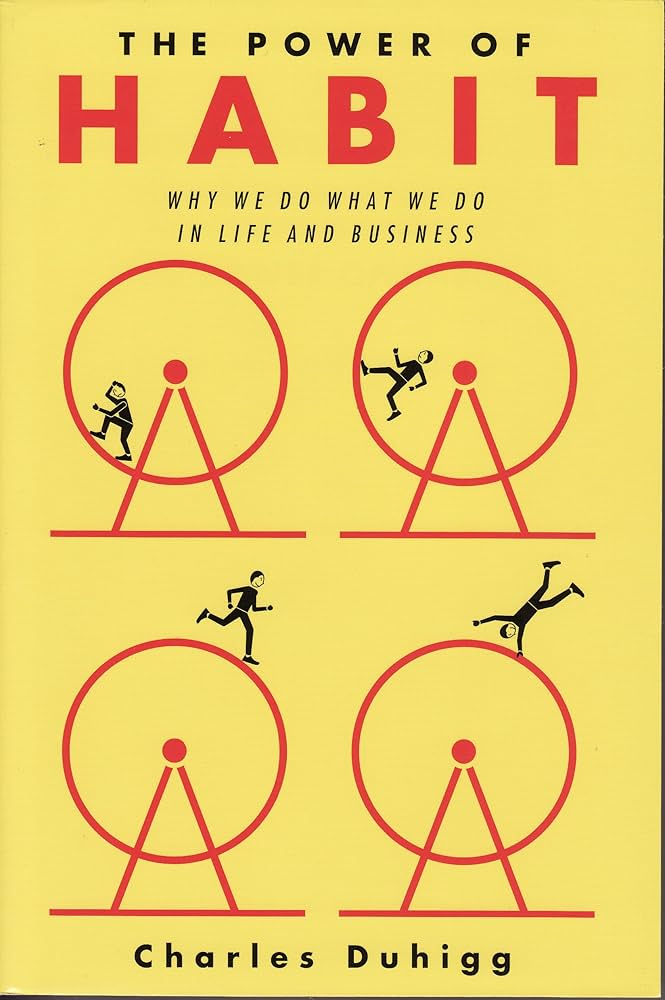
Your habits may be the difference between your successes and failures
40% of the things we do daily do not require us to make any decisions, but they are habits that we have formed over time.
Change might not happen quickly and it isn't always simple. But with patience and hard work, almost any habit can be changed. ~ Charles Duhigg
Nobody can change your habits for you; you have to choose desirable habits each day. ~ Charles Duhigg
Habits ensure your brain does not expend too much energy
The brain is a complex organ, but it’s always looking for ways to try and save you energy and effort. This is where habits come in because they are done without much thought.
Every part of the brain controls specific activities in the body. ~ Charles Duhigg
The basal ganglia are located close to the brain stem and is one of the most primitive parts of the complex brain.
Research showed that the basal ganglia play a vital role in understanding and remembering patterns, and in forming the behaviors linked to them. It is also the storage house for habits during waking and sleeping hours.
Habits are not magical; they are formed through a process
Before a habit is formed, it has to go through 3 steps — the habit loop: a cue, a routine, and a reward. These steps not only form a habit but also provide the necessary motivation needed from the start of habit formation to the end.
- The cue is a trigger, something that pushes your brain into autopilot, and then also decides the habit to use at that time.
- A routine can be physical, mental, or emotional; it is the way your brain recognizes a habit after a few trials.
- The last step is the reward. This determines whether or not an action deserves to become a habit.
The brain responds faster to a trigger only when it deems it worthwhile. ~ Charles Duhigg
It is possible for your organization to cash in on your habits
They only need to give you a cue that encourages you to find a reward.
When you see an advert, your brain starts to crave a reward associated with a trigger and this is what is called “neurological craving.”
It is easier to change old habits than to form new ones
It is far easier to change a habit that you already have than to form a completely new one.
You already have some information about the old habit in your brain — the cue, the routine, and the reward. All you need to do is to change certain parts, rather than start from the beginning.
There is one golden rule of habit change: you can't destroy a bad habit, you can only change it. ~ Charles Duhigg
You can change bad habits by changing the routine in order to get the same reward.
The willingness to change is necessary to form new, positive habits. ~ Charles Duhigg
A habit is changed by identifying the cue, changing the routine, and substituting the sensation.
To be successful, you need to work on increasing your positive habits
Keystone habits are habits that matter more than others, either in life or in business.
Self-discipline is one of the keystone habits, and it includes not being late, working hard, overcoming obstacles. This is a keystone habit that is extremely positive and one which will see you through life towards success.
One person’s habits can inspire change that will last for generations
Rosa refused to move to the back of the bus and this marked the start of the civil rights movement. This singular act built the foundation for the equality movements we see today. This is why movements and habits are very interwoven; they are dependent on each other.
When movements begin, it is due to the already existing social habits. Everyone in the community plays a role as it affects everybody in the long run. It fosters unity and communal growth and encourages participants to develop new habits.
Habits aren’t always negative, they can kick-start social movements which create major change. ~ Charles Duhigg
When you see a negative social habit, challenge it.
Changing habits is an individualistic process; you decide what you want
There are so many different ways to change a habit, but the most complicated part is that every individual is different.
Learning a new habit is specific to the person in question as there is no one-size-fits-all process. ~ Charles Duhigg
There are 4 main steps you need if you are ready to change a habit:
- Firstly, you need to identify the routine that forms the habit. As discussed in an earlier chapter, the routine is the second part of habit formation. You need to identify the routine for the selected habit.
- Secondly, experiment with different rewards. This means you can change the negative reward for something positive, for example. If you are trying to change a smoking habit, you can replace smoking with exercise.
- Another step is to work on the habit cue (first habit formation step) and see if you can tweak it. So, for instance, you can set an alarm that reminds you it’s time for exercise.
- Finally, just go for your plan. The longer you sit thinking about it, the more you keep the negative habit. Just do it!
Conclusion
Everyone is made up of habits that they’ve built over time. The way you go about your day from start to finish is a reflection of your habits.
All you need to make more sales at work or have a happier home might be a few habit changes. Identify them and start the process.
Try this
Think carefully about the products you regularly purchase and identify whether your purchasing habits are being manipulated by companies
You can list the pros and cons of buying each product and judge for yourself.