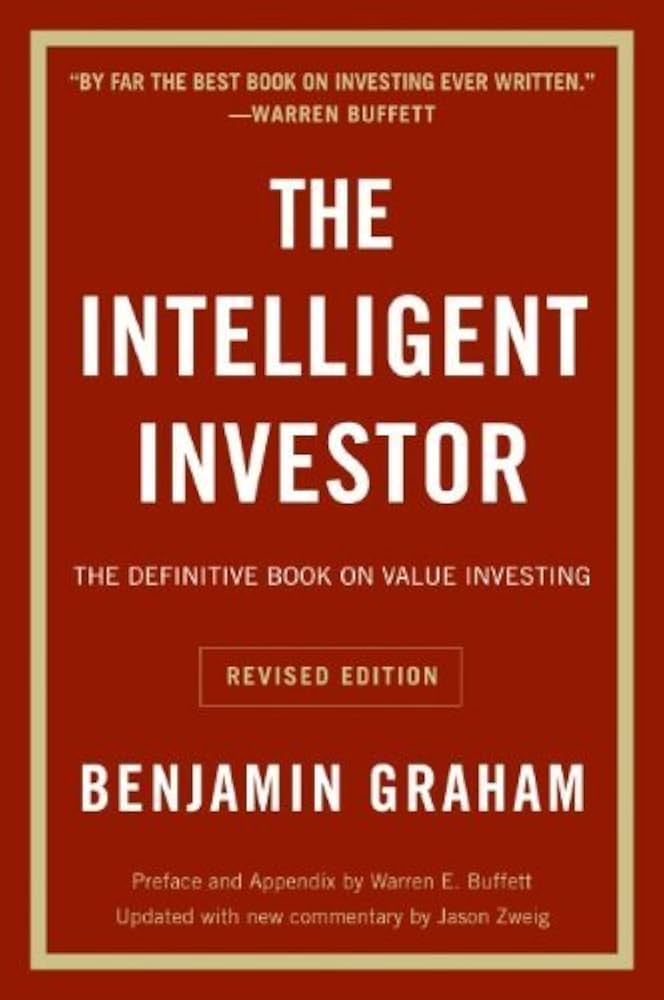
Investing is really simple if you take the time to learn it
An investor is an individual who takes calculated risks with hopes of financial return. ~ Benjamin Graham, Jason Zweig
Investors rely on different financial instruments to earn a return rate and accomplish important financial objectives like building retirement savings, funding a college education, or merely accumulating additional wealth over time.
An investment is usually an asset bought after careful research to generate an increased monetary return or appreciation in the future.
An investment operation ensures the security of your invested capital and a promise of profit.
Speculation is an operation that neither assures the security of your money nor your profit at the end of the investment period.
Thus, an intelligent investor is involved in ventures that will yield a long–term reward while a speculator is more interested in what they can get in the short–term.
People who invest make money for themselves; people who speculate make money for their brokers. ~ Benjamin Graham
The intelligent investor is one who makes decisions based on ample research so as to not incur losses
investors observe the company whose stocks they want to buy, study the history of gain and losses, and protect themselves from any losses before moving forward to invest.
stock exchange giants (Wall Street) profits more from speculation. They do this by downplaying investing as a means of making wealth. The speculator is prone to making rash decisions and trying out tactics that have recently worked.
Investment is a sure thing; it works now and will work long after. The intelligent investor knows this and stays ahead of the market.
Inflation is an instance where the value of money drastically reduces, usually due to an increase in the printing of money or a large influx of cash into the market.
This occurrence affects the market significantly because whatever shares you had bought would have reduced in value, and you have stocks with poor monetary value.
How do you survive this as an investor? The obvious advice is to buy more stocks, invest more in shares since they are low value so that when the market heals, you will sell them at a higher monetary value.
The intelligent investor makes wise decisions to stay ahead of the curve
The advice to invest in bonds might be a sound and a sure way to evade the stock market's inconsistencies, but there are sides to it that might prompt you to show caution.
If your only interest in investing in stocks is the cash profit, then you run the risk of losing it all. The intelligent investor should consider it as a passive option and not a principal obligation.
They can invest in foreign bonds — offerings from countries outside the U.S., but this is if they are willing to take on much more risk than previously encountered.
The usual practice is holding stocks and selling them when they become overpriced and find shelter in bonds until another dip in prices.
But the intelligent investor knows this is an impractical plan because you cannot simply predict when the market will experience a drop or arise.
Benjamin Graham and Jason Zweig urge investors to diversify their portfolios.
as you seek to diversify, it is not advisable to indulge in foreign stocks because it would mean you were robbing yourself of the security offered by your country's currency.
Becoming an investor involves a lot of research and practice
The average individual who is interested in trading in stocks and funds can do so without fear with these steps:
- Firstly, when you pick a particular company to invest in its shares, look at their long–term goals — the plans they have for their future.
- Secondly, consider the quality of their management — if the company is centered around paying the owners or managers huge sums, you shouldn't invest there.
- If the company lacks financial strength, you'd be making a financial mistake from which you'd not recover quickly.
- Also consider the company's dividends per fiscal year and, lastly, the current dividend report.
If you need more specific considerations before investing, the following should suffice:
- Avoid companies with a total market value of less than $2bn.
- Go for the companies whose current assets are twice their current liabilities.
- The companies must have expected stock earnings for at least ten years.
- The companies must have consistently paid dividends for at least 20 years.
- There must be a minimum increase of at least one–third in per–share earnings in the past ten years.
- The company's share price should not be more than 15 times the earnings of the past three years.
the layman can navigate the uncertain waters of the stock market and, with the defensive investor's approach, make maximum profit and minimize risk.
The enterprising investor is an intelligent investor and a risk–taker
The standard guidelines for picking winning stocks won't cut it for the investor who isn't afraid to take big risks — the enterprising investor. They'd have to employ a new set of measures that engage this investor's level of activity.
Unlike the defensive/layman investor, the enterprising investor is more involved in running their portfolio and actively monitors the investments they make, periodically tweaking the setup.
For the enterprising investor, the following are a few ways to secure the most profitable stock options. The first step is to practice. They can start with monitoring the market, picking out the winners, keeping tabs as though they were banking on them with actual money.
Always go for the companies run by the owners, not the managers, because there is a higher chance they will do business for the general good of both them and their investors. You can also keep an eye on the yearly earnings.
keep an eye out for the company's health and financial power; that way, you are sure of getting profit when you invest long–term.
The enterprising investor can also get convertible bonds — bonds that can be converted into stocks and other securities.
These kinds of securities offer the holders an option to diversify their portfolio and a shelter to hide under if either of the funds' prices dips and loses worth.
These convertible stocks outperform regular stocks and are a reliable option for the enterprising investor who's not down for getting stuck with an underperforming stock option.
It's like copying and surpassing the current market. But if the stock it is mirroring does poorly, it will do even worse. This multiplier effect is one disadvantage of owning a convertible bond.
The intelligent investor picks the best deal from the multitude of options
Emotions are an investor's worst nightmare and can lead to a bad investment. ~ Benjamin Graham, Jason Zweig
There is a tendency for us as humans to claim to have found a pattern, a handle on the market because of a few lucky guesses. It is noteworthy that this is false and can be detrimental for investors; there is no perpetual gain.
Public opinion can also form or influence individual opinion; simply because a company is hailed as groundbreaking doesn't mean it is. A company isn't famous, or in the media, a lot doesn't translate to poor returns. Do your research, and don't be bullied by peer pressure into making a mistake.
Even the experts can be wrong; you can research the stocks by yourself. ~ Benjamin Graham, Jason Zweig
Go for the less glamorous companies that produce steady returns, even though they're not in billions, but they're on the rise, and they are undisturbed. Invest in the proverbial dark horse and not the shiny white horse; it just might be a whitewash.
Conclusion
The chances of getting a good return on speculation are a million to one, but with investment, your invested capital remains unchanged, and your profit comes correct.
A lot of investors are mismanaging their portfolios, this is why you'll have someone with a “packed” portfolio but end up broke. You need to do your research extensively before making an investment in any stock.
To avoid running at loss, ensure you are armed with ample data supporting your decision and not just feelings. Being an intelligent investor is far beyond simply investing or research, simply put, it is the ability to pick out favorable stock, know when to invest and when to sell.
Try this
If you haven't considered a viable retirement plan, then take a look at stocks and bonds you can invest in today! You can also research the shares offered by top brands and purchase the best fit for you.